Q1: I farm my own land and spray for a few neighbors too. Would a 30-liter agricultural spraying drone be a good middle ground?
A1: The UA30 can serve both, but its 30L liquid system and mixed spraying-spreading capability are especially useful when there is enough recurring workload to keep the aircraft productive. Contractors and cooperatives should size batteries, charging and spare parts for peak-season utilization.
Q2: I'm confused by an agricultural drone listing that says 30 liters for liquid but 50 liters for solids. Are those two different capacities?
A2: The UA30 has a 30L liquid spray tank and a 50L-volume solid spreading tank. These are tank volumes, not identical weight ratings.
Q3: If an agricultural drone has a 50-liter fertilizer hopper, how do I know the actual kilograms I'm allowed to load?
A3: No. The published spreader volume is 50L, while the listed internal solid load is 30kg. Actual safe loading also depends on material density and flow characteristics, so never convert liters to kilograms without the material data.
Q4: When I plan a job with a 30-liter agricultural spray drone, what swath width should I use rather than the best-case figure?
A4: The stated effective spray width is 6–8m. Set route spacing only after calibration for the crop, altitude, droplet size, speed, wind and target deposition.
Q5: We spread different seeds and fertilizer sizes. What granules can an agricultural drone spreader handle without blocking or throwing unevenly?
A5: The published spreading width is 3–8m, and the listed compatible material diameter is 0.5–5mm. Confirm density, moisture, shape and flowability, then calibrate the feed rate before treating a full field.
Q6: I'm costing jobs for an agricultural drone service. What's a realistic hectares-per-hour rate for a 30-liter machine once stops are included?
A6: A reliable answer needs application rate, route speed, effective width, refill distance, battery turnaround, field obstacles and headland time. Ask for a calculation using your own program rather than a theoretical maximum under unspecified conditions.
Q7: If I buy a 30-liter agricultural drone, what battery does it use, and am I locked into buying replacements from overseas?
A7: The current specification lists a 14S 30Ah, 1596Wh intelligent flight battery. Confirm the exact battery model and connector supplied in the final package because replacement batteries must match the aircraft and charging system.
Q8: A supplier says the agricultural drone battery can recharge in about nine minutes. Is that realistic in normal field use?
A8: The published specification states approximately nine minutes from 20% to 95% under the specified compatible charging conditions. Real time depends on power source, temperature, battery health and charger limits; fast charging also requires disciplined battery cooling and inspection.
Q9: We often work far from a proper power supply. What would I need to charge a 30-liter agricultural drone in the field?
A9: Not always. A correctly rated fixed power supply may work at a farm base, while remote operations may benefit from a compatible field generator. Compare available electrical capacity, daily sorties, fuel logistics, noise, grounding and local safety rules.
Q10: I'm comparing quotes for a 30-liter agricultural spray drone. Should RTK be included, or is it normally an add-on?
A10: The product supports optional RTK for higher positioning accuracy; it should not be assumed included. Confirm the quoted hardware, correction source and local coverage, and remember that positioning accuracy does not replace spray calibration.
Q11: Around our fields there are trees, poles, and wires. How much can an agricultural drone's radar actually detect and avoid?
A11: It includes front and rear obstacle-avoidance radar plus downward terrain-following radar. These are safety aids, not a guarantee of detecting every wire, branch or low-contrast object, so the operator must survey the field and set conservative routes.
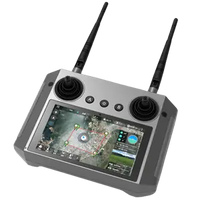
Q12: The agricultural drone controller is advertised for 3 kilometers. Does that mean I can legally spray that far from where I'm standing?
A12: The published 3km figure is an unobstructed communication specification, not automatic legal permission. Many jurisdictions require visual line of sight or specific approval, and terrain, interference and antennas can reduce practical link performance.
Q13: With all 30 liters on board, what loaded flight time should I expect from an agricultural spraying drone?
A13: Loaded endurance changes with actual liquid weight, route, wind, temperature, battery condition and reserve policy. Use a payload-specific field test and maintain a safe landing reserve instead of treating a best-case number as a guarantee.
Q14: We grow a mix of row crops and orchards. Where does a 30-liter agricultural spraying drone work well, and where is it the wrong tool?
A14: Potential uses include grains, rice, cotton, sugarcane, orchards and other crops where the label and local rules permit drone application. Suitability depends on canopy, terrain, required volume, drift risk and agronomic validation.
Q15: Some of our liquid fertilizer is thicker than pesticide. Can a 30-liter agricultural drone pump and atomize it properly?
A15: Compatibility must be checked case by case. Provide viscosity, formulation, corrosiveness, filtration needs, dose and label instructions; test calibration and cleanability before commercial application.
Q16: If I switch an agricultural drone from seed to granular fertilizer, how do I recalibrate the spreader?
A16: Measure material density and particle size, verify that it falls within the listed 0.5–5mm range, run a controlled catch test, weigh the output and adjust feed rate, speed and route spacing. Recalibrate when material or moisture changes.
Q17: Our agricultural drone crew may work from sunrise to late afternoon. How many batteries and chargers should we budget for?
A17: Model the full work cycle: flight, refill, battery removal, cooling, charging and reserve capacity. The correct count depends on treated area, application rate, available power and whether one or multiple aircraft share the charging system.
Q18: At the end of a full day with an agricultural spray drone, what should the operator inspect, clean, and record?
A18: Inspect propellers, motors, arms, landing structure, radar surfaces, connectors and battery condition; clean the tank, pump, flow meter, filters and nozzles according to the product label and manual. Record faults before the next mission.
Q19: We already run other agricultural drones. Can a 30-liter model fit into the same fleet without complicating batteries, training, and parts?
A19: Yes, but check controller compatibility, frequency rules, battery and charger standardization, spare-parts inventory, pilot procedures and whether simultaneous or swarm operations require additional approval.
Q20: I'm importing an agricultural drone for commercial work. Which approvals should I check before it ships to my country?
A20: Depending on the country, you may need import and radio approvals, aircraft registration, pilot credentials, an agricultural aviation or pesticide-application permit, approved chemical labels and insurance. The customer and local partner must verify the exact route.
Q21: I'm a regional agricultural drone dealer. Can I order a demo unit together with technician training and a starter spares kit?
A21: Request a commercial quotation that separately identifies demo configuration, batteries, charging equipment, optional spreader, training, warranty terms and a recommended spare-parts package. Dealer pricing and territory terms require direct commercial approval.
Q22: Most of our jobs are medium-sized farms. How would you compare 20-, 30-, and 50-liter agricultural spray drones for operating cost?
A22: The UA30 sits between them: more liquid and solid capacity than the UA20 with less field and transport burden than the UA50. Choose from workload, application rate, logistics, crew capability and local weight rules rather than tank size alone.
Q23: Our FPO is considering an agricultural drone for shared spraying services. Is a 30-liter size a practical balance?
A23: It can be evaluated for shared or demonstration use because it combines 30L spraying with an optional solid spreading system. Procurement should also budget for trained pilots, charging, transport, PPE, cleaning, records, local approvals, maintenance and utilization after the demonstration period.
Q24: We want an agricultural spraying drone for university research and pilot training. What setup would make sense for both?
A24: Potentially, but the institution should confirm instructor qualifications, insurance, safe operating areas and whether the controller exposes the settings and records required by the curriculum or study. Request a training configuration and written data-access details before ordering.
Q25: If our agricultural drone operation gets audited or insured, what flight, chemical, and maintenance records should we already be keeping?
A25: Keep purchase and serial records, pilot credentials, mission and application logs, battery cycles, inspections, repairs, incidents and parts replacement. Confirm which records the controller can export and which must be maintained separately for local rules or insurance.