Q1: We regularly move equipment close to 100 kilograms between sites. Is a heavy-lift delivery drone a realistic solution for that?
A1: The UD100 is rated for a maximum payload of 100 kg. That total must include the cargo, box or sling, protection, release mechanism, and mounting hardware, and a route-specific margin should be retained for elevation, temperature, wind, and reserve energy.
Q2: When a heavy-lift delivery drone is rated for 100 kilograms, is that cargo alone or the total aircraft weight?
A2: It is the maximum payload rating. The UD100 is listed at about 97 kg with two batteries and has a maximum takeoff weight of 197 kg; use the approved weight-and-balance method because optional equipment and installation hardware also consume payload.
Q3: If a 100-kilogram delivery drone leaves fully loaded, how much usable flight time should we plan for?
A3: The published endurance is 19 minutes with a 100 kg payload. Operational mission time must be lower after reserving energy for takeoff, landing, wind, routing changes, battery condition, and the contingency policy required by the operator or regulator.
Q4: The outbound trip is loaded but the return is empty. How much longer can a 100-kilogram delivery drone stay airborne on the return?
A4: The UD100 is listed for 40 minutes with no payload. A real empty return still includes installed cargo equipment and is affected by wind, elevation, temperature, speed, and reserve requirements, so use the mission-planning value established in acceptance testing.
Q5: Most of our loads are 50 to 80 kilograms, not 100. How do we estimate delivery drone endurance for those in-between weights?
A5: Intermediate-load endurance is not published on the current UD100 page, so it should not be guessed by straight-line interpolation. Provide the payload distribution and route profile so representative 50, 60, 70, and 80 kg acceptance flights can establish a usable performance table.
Q6: We have a 10-kilometer loaded route. Could a 100-kilogram delivery drone fly it and still land with a proper reserve?
A6: That cannot be confirmed from the radio-range figure alone. The listing references a 10 km control radius and 15 km transmission in favorable conditions, but a loaded route needs a calculation using the 19-minute full-load endurance, actual wind and elevation, one-way or round-trip profile, landing time, and required reserve, followed by supervised testing.
Q7: Some parts are needed urgently to prevent shutdowns. How fast could a heavy-lift delivery drone get a load to the site?
A7: The UD100's listed speed is 0 to 10 m/s. End-to-end response time must also include mobilization, loading and balance checks, preflight, climb, routing, descent, cargo handoff, postflight inspection, and battery handling.
Q8: Before we request a purchase order, what should the standard 100-kilogram delivery drone package include?
A8: The current product listing shows the complete UD100 aircraft, one UniRC7 remote controller, two standard 24S 70Ah batteries, and one 9000W charger. The 50 kg descent device and other delivery systems are optional, so the final bill of materials should be written into the quotation.
Q9: Our facility manager needs the electrical load. What power supply does the 100-kilogram delivery drone charger actually require?
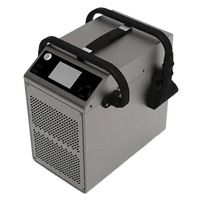
A9: The listed intelligent power supply accepts 100 to 380V input and provides up to 9000W for the 24S system. Your electrician must verify supply voltage, circuit capacity, connectors, grounding, ventilation, protection, and local electrical code; do not assume an ordinary outlet can support maximum charging power.
Q10: Those flight batteries look very heavy. How should a 100-kilogram delivery drone fleet handle, inspect, and replace them?
A10: Each listed 24S 70Ah battery weighs about 22.5 kg, and the aircraft uses two. The battery specification lists more than 300 cycles at 80 percent, but actual replacement timing depends on charge rate, depth of discharge, temperature, storage, cell balance, maintenance records, and retirement criteria.
Q11: We can't land at the receiving point. Can the cable system on a 100-kilogram delivery drone lower the full load?
A11: No. The optional UPDD-01 descent device is rated for a maximum load of 50 kg and up to 30 m of cable. For heavier cargo, another approved delivery method and engineering review are required; never infer the winch limit from the aircraft's 100 kg payload rating.
Q12: Our cargo comes in different shapes. Can a heavy-lift delivery drone use a box, hook, or custom release system?
A12: The UD100 page lists optional payload droppers and a payload box. Compatibility depends on dimensions, center of gravity, aerodynamic area, attachment points, release logic, and delivery-zone safety, so provide cargo drawings and the intended landing, lowering, or release method for confirmation.
Q13: We're planning the truck and loading crew. What ground-handling equipment does a 100-kilogram delivery drone need?
A13: With arms and propellers folded, the UD100 is listed at 1656 x 1060 x 720 mm and about 97 kg with two batteries. Plan a suitable truck or trailer, access clearance, multiple-person or mechanical handling, tie-downs, battery segregation, and cases for the controller, charger, tools, and cargo equipment.
Q14: Our refinery and pipeline teams move heavy spares over rough ground. Would a 100-kilogram cargo drone work for that?
A14: The 100 kg payload class can suit heavy industrial spares when the route and site allow it. The assessment must cover load shape, containment, hazardous-area restrictions, dust or corrosive exposure, RF interference, terrain, emergency landing zones, worker exclusion areas, and aviation approval.
Q15: In a disaster, we'd want to move pumps, generators, and shelter supplies. Is a 100-kilogram delivery drone suitable for that role?
A15: The UD100 can be evaluated for relief loads up to 100 kg, especially where roads are damaged. A deployable program also needs transport vehicles, power, trained crews, surveyed sites, communications, airspace coordination, safe rigging, maintenance support, and approval for the selected cargo-delivery method.
Q16: We're looking at ship-to-shore work. What extra risks would a 100-kilogram delivery drone face around vessels and offshore platforms?
A16: That mission requires a dedicated feasibility study. Deck motion, wind, salt corrosion, GNSS and compass effects, communications, spray exposure, flotation or recovery strategy, dangerous goods, maritime coordination, and alternate landing options are not resolved by the standard payload and range specifications.
Q17: The brochure shows a wide temperature range. Can a heavy-lift delivery drone still carry full payload at both extremes?
A17: The aircraft listing shows -10 degrees C to 65 degrees C, but that does not guarantee full-payload performance throughout the entire range. Battery charge and discharge limits, motor and electronics limits, payload requirements, density altitude, cooling, and locally validated performance must all be applied, with the most restrictive condition governing dispatch.
Q18: Our site is exposed and gusty. What wind limit should we use for a fully loaded 100-kilogram delivery drone?
A18: The listed maximum wind resistance is 6 m/s. A loaded operating limit may need to be lower for gusts, cargo area, route direction, turbulence, hover time, and landing precision, and should be set through the safety case and acceptance flights.
Q19: We need to place loads on a prepared pad. Would RTK make a heavy-lift delivery drone accurate enough for repeat deliveries?
A19: RTK is listed as an option. The published hover accuracy with strong GNSS is 1 cm + 1 ppm horizontally and 1.5 cm + 1 ppm vertically, but accurate cargo placement also depends on base-station configuration, surveying, wind, rigging motion, the delivery device, and a controlled exclusion zone.
Q20: The route passes behind terrain. What controller range should we expect from a 100-kilogram delivery drone in the real world?
A20: The UniRC7 specification lists 10 to 15 km in rural conditions at 120 m with few obstructions and medium interference, and longer figures over open sea in low interference. These are link-condition examples, not guaranteed delivery ranges; survey the spectrum, terrain, antenna setup, legal altitude, and command-and-control requirement for the actual route.
Q21: We're trying to understand the regulatory path before buying. What approvals does a 100-kilogram delivery drone operation usually need?
A21: Requirements vary by country and mission and may include aircraft registration, operator certification, pilot licensing, airworthiness or special-category approval, remote identification, airspace permission, operations over people, BVLOS, heavy-aircraft rules, radio approval, insurance, and authorization to drop or lower cargo. Confirm these with the responsible authority before deployment.
Q22: Some of our loads are fuel, batteries, and chemicals. Can a heavy-lift delivery drone legally carry dangerous goods?
A22: Do not load dangerous goods solely because they are below 100 kg. The substance, packaging, segregation, aircraft configuration, emergency response, environmental rules, aviation dangerous-goods rules, and route approval all require specialist review, and some loads or missions may be prohibited.
Q23: Our control center already manages vehicles. Can a heavy-lift delivery drone connect to our route, telemetry, and fleet software?
A23: That integration must be specified and tested as a project. Provide the required APIs, data fields, command authority, route import, payload controls, maps, network architecture, cybersecurity, data residency, user roles, and number of aircraft so compatibility with the controller and flight-control system can be confirmed.
Q24: We're budgeting five years of operation. What maintenance support and critical spares should we include for a 100-kilogram delivery drone?
A24: Budget from planned flight hours, payload cycles, environment, fleet size, technician capability, required availability, and import lead times. Request a UD100 maintenance schedule, inspection criteria, tooling list, battery-management plan, and priced critical-spares package covering propulsion, propellers, arms, landing gear, connectors, delivery equipment, and consumables.
Q25: The bank and insurer both want a project file. What information should we prepare for a 100-kilogram delivery drone service?
A25: A finance or insurance case should include aircraft configuration, purchase and import costs, route approvals, operator qualifications, payload and flight-hour forecast, maintenance and battery replacement, spares, loss history assumptions, safety systems, storage, cybersecurity, downtime, residual value, and verified revenue or cost-savings inputs. No fixed return or insurability can be promised from the product specification alone.